




Last Updated 10-09-2026
Executive Summary
- 2026 Market Insights: Explore key real estate trends and opportunities shaping Niagara in 2026.
- Buyer Perspective: Understand important factors for buyers navigating the current market.
- Seller Strategy: Discover practical considerations for pricing, marketing, and selling property.
- Investment Outlook: Review opportunities and market factors that may influence investors.
- Niagara Focus: Get local insights for Niagara Falls, St. Catharines, Welland, and surrounding areas.
Toronto’s double land transfer tax is the total closing tax a buyer pays in the City of Toronto, where both the provincial Ontario land transfer tax and the municipal Toronto land transfer tax apply. For buyers, that means a Toronto purchase can require significantly more cash at closing than a similar home purchased elsewhere in Ontario.
When purchasing real estate in the City of Toronto, buyers are subject to both the Ontario Provincial Land Transfer Tax and the Toronto Municipal Land Transfer Tax (MLTT) – effectively doubling your closing tax bill. Learn how land transfer taxes are calculated, eligible rebates, and why purchasing in Niagara saves you up to $30,000+ in tax.
Who Is This Guide For?
This guide is for Toronto home buyers, sellers comparing net proceeds, and investors calculating true purchase costs. It is especially useful for people comparing Toronto with nearby Ontario markets where only the provincial tax applies.
Compare your tax savings with our land transfer tax Toronto vs Niagara calculator.
Why Toronto has a double tax
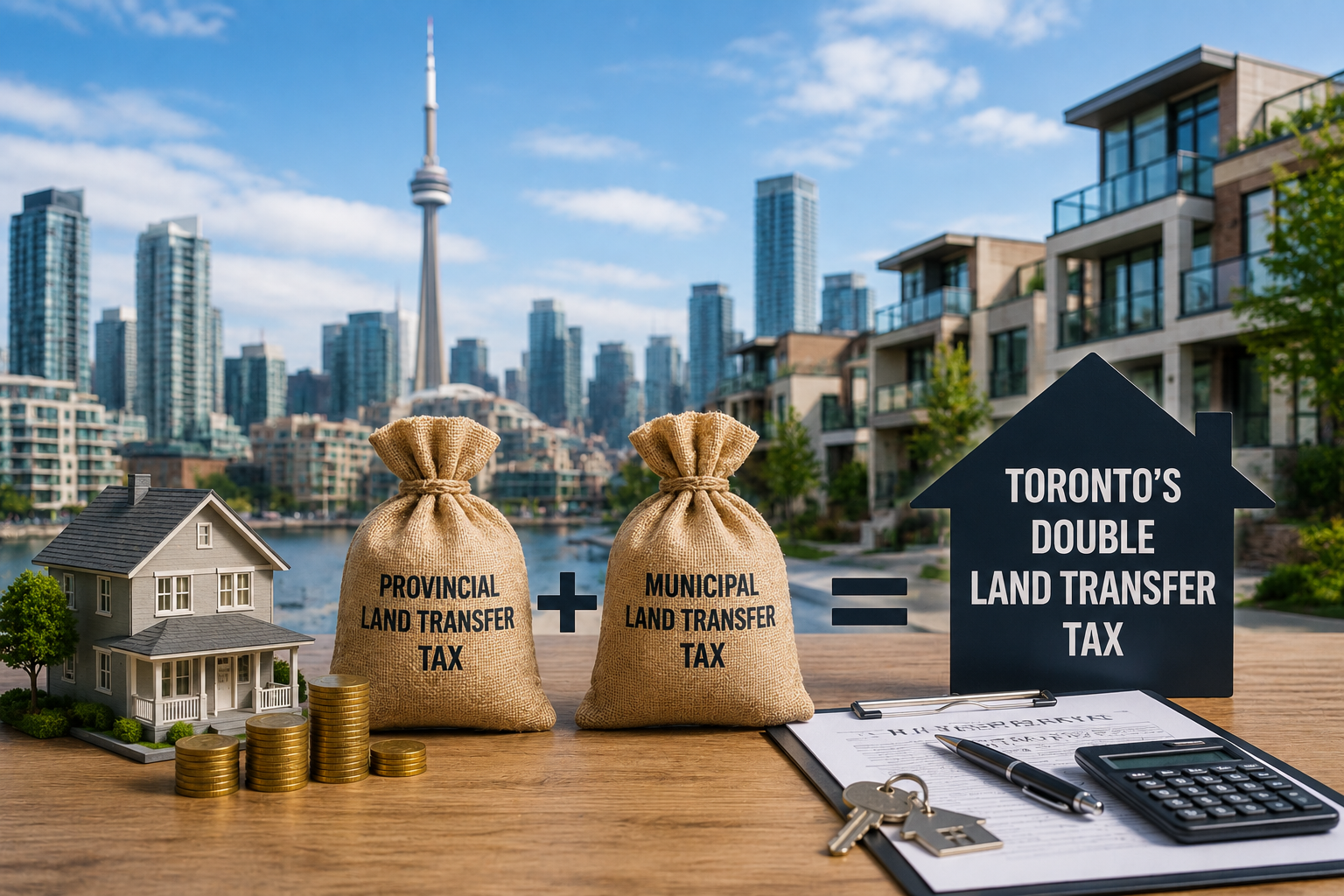
Toronto is the only city in Ontario that charges a municipal land transfer tax on top of the provincial land transfer tax. That is why the same property price can create a higher closing bill in Toronto than in the rest of the province.
The tax exists because Toronto has its own municipal land transfer tax system, while the rest of Ontario only pays the provincial levy. For buyers, the key takeaway is simple: Toronto closing costs are different, and they should be budgeted separately from the purchase price.
What changed in 2026
Toronto approved new graduated municipal land transfer tax rates for high-value residential properties, and the new brackets took effect on April 1, 2026. The updated rates affect the upper brackets above $3 million and increase the tax burden on luxury homes and some investment properties.
The higher municipal rates now include 4.40% from $3 million to $4 million, 5.45% from $4 million to $5 million, 6.50% from $5 million to $10 million, 7.55% from $10 million to $20 million, and 8.60% above $20 million. Those rates apply marginally to the relevant price portion, not to the full purchase price.
How the tax is calculated
Toronto land transfer tax is calculated using graduated brackets. That means each portion of the purchase price is taxed at the rate for that bracket, rather than taxing the entire home price at one flat rate.
The provincial and municipal taxes are calculated separately and then added together. That is why Toronto buyers often see a much higher total closing tax than buyers in surrounding cities.
Comparison table
| Purchase Location | Taxes Paid at Closing | What It Means |
|---|---|---|
| Toronto | Provincial Land Transfer Tax + Municipal Toronto Land Transfer Tax | Highest Closing Tax Burden in Ontario |
| Rest of Ontario | Provincial Land Transfer Tax Only | Lower Closing Costs Compared to Toronto |
| Toronto Luxury Homes (Over $3 Million) | Provincial Land Transfer Tax + Updated Municipal Tax Brackets | Higher Closing Tax Burden Following the April 1, 2026 Changes |
Example budget impact
The biggest impact of Toronto’s double tax is on your cash required at closing. A buyer can qualify for a mortgage but still fall short on closing day if land transfer tax is not planned early. That is especially true in Toronto, where closing costs can meaningfully change the amount of cash a buyer needs to bring to the table.
This is also why many buyers use calculators before they submit an offer. Tools from Ratehub, TRREB, and other property finance sites show the Toronto tax separately from the Ontario tax so buyers can compare real closing costs more accurately.
Who feels it most

First-time buyers feel the pressure when comparing Toronto with nearby cities. Even when the purchase price looks manageable, the closing tax can push the total cost beyond the original budget.
Move-up buyers and investors feel it too. Investors need to account for tax as part of acquisition cost, while sellers in the luxury market should understand that the 2026 MLTT changes may affect buyer affordability at the top end.
What smart buyers should do
The smartest move is to budget for land transfer tax before negotiating. Buyers should compare Toronto with nearby Ontario markets, calculate the tax early, and leave room for legal fees, moving costs, and a reserve buffer.
If you are a first-time buyer, check whether a rebate applies. Eligible first-time purchasers may receive rebates on both the provincial and Toronto municipal portions, subject to the current maximums.
Plan your total budget with our guide to the hidden closing costs of Ontario homeownership.
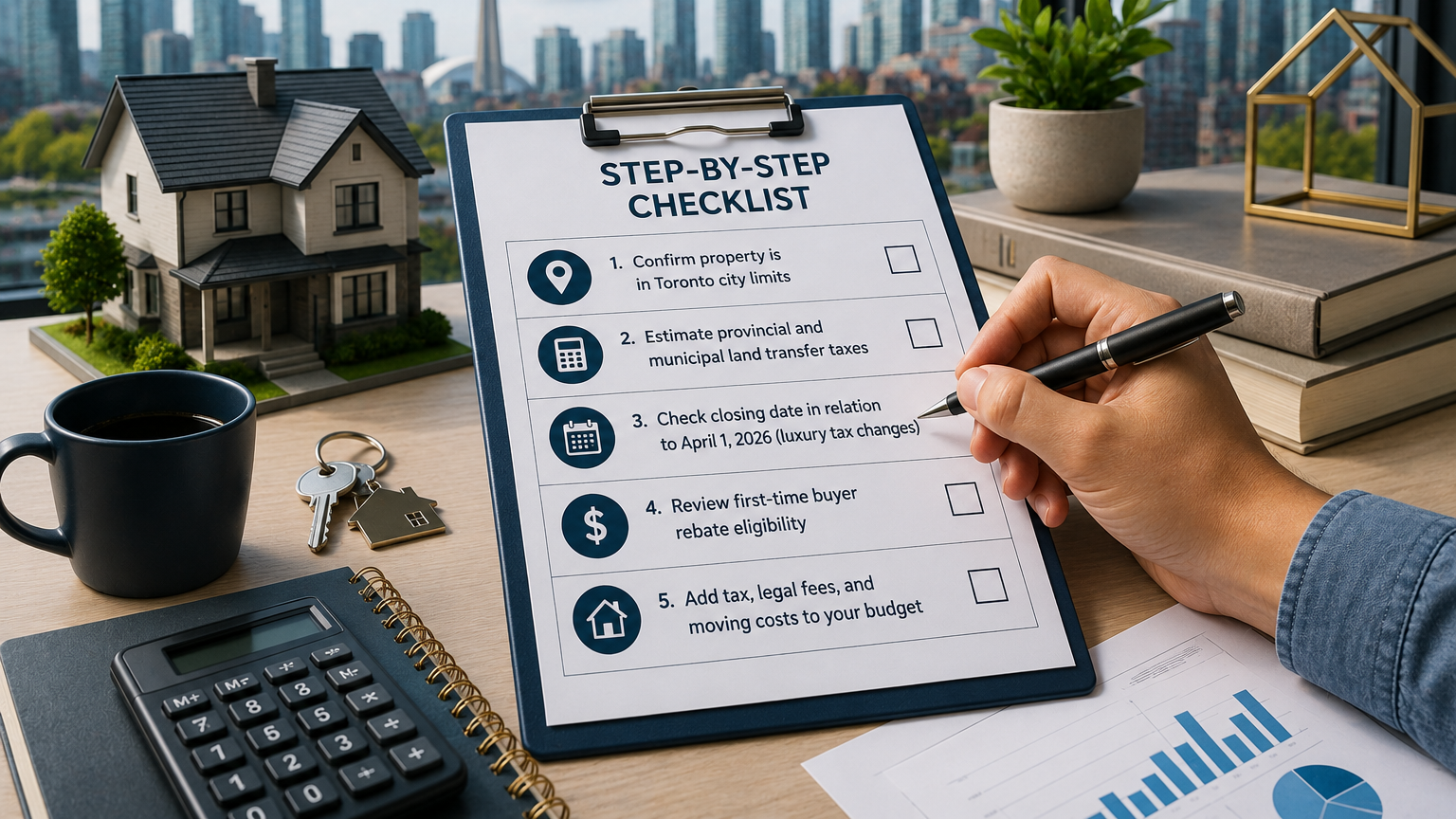
Step-by-step checklist
- Confirm whether the property is inside Toronto city limits.
- Estimate both provincial and municipal land transfer taxes.
- Check whether your closing date falls before or after April 1, 2026 for luxury purchases.
- Review whether first-time buyer rebates apply.
- Add tax, legal fees, and moving costs into your budget before making an offer.
Audience and use cases
This topic applies to Toronto buyers, especially people purchasing a condo, detached home, or luxury property. It also applies to real estate agents, mortgage planners, and investors who need to explain closing costs clearly to clients.
It is less relevant for buyers outside Toronto because the municipal tax does not apply there. In those cases, only the provincial Ontario land transfer tax is charged.
Why Quantum Team Realty should cover this topic
Toronto’s double land transfer tax is one of those cost questions that buyers search right before they are ready to act. A clear explanation helps build trust, improves decision-making, and positions Quantum Team Realty as a practical guide for buyers who need more than a listing search.
The strongest content angle is not just explaining the tax. It is showing how the tax changes buyer strategy, affordability, and closing preparation in the Toronto market.
Final takeaway
Toronto’s double land transfer tax can significantly affect closing costs, especially for buyers with tight budgets and for luxury purchases over $3 million. The 2026 municipal changes make early budgeting even more important. If you are buying in Toronto, calculate the tax before you make an offer so the purchase stays financially workable from day one.
Book a Free Buyer Consultation → https://quantumteamrealty.com/contact/
Frequently Asked Questions
What is Toronto’s double land transfer tax?
It is the combined provincial and municipal land transfer tax paid when buying property in Toronto.
Is Toronto the only city in Ontario with a municipal land transfer tax?
Yes. Toronto is the only Ontario city that adds its own municipal land transfer tax on top of the provincial tax.
Did Toronto’s municipal land transfer tax change in 2026?
Yes. Higher-value residential properties above $3 million are now subject to updated graduated municipal rates effective April 1, 2026.
Do first-time buyers get a rebate?
Eligible first-time buyers may qualify for rebates on both provincial and Toronto municipal land transfer tax portions.
Why should buyers plan for this early?
Because the tax is due at closing, and failing to budget for it can create a cash shortfall even when the mortgage itself is approved.

Sunny Chadha
Sunny Chadha is the Co-Founder of Quantum Team Realty and brings over 15 years of experience in Niagara real estate. He is passionate about helping clients make informed decisions and sharing his deep knowledge of the local market.


